Trophic Cascades and the Ecological Significance of Apex Predators
In the intricate web of an ecosystem, every species plays a role. However, the influence of certain species is disproportionately large, to the extent that their presence or absence can fundamentally alter the entire structure and function of their environment. Apex predators, those at the pinnacle of the food chain, are prime examples of such "keystone species." Their impact extends far beyond their immediate prey, initiating a chain reaction known as a trophic cascade that reverberates through multiple levels of the ecosystem. The reintroduction of gray wolves to Yellowstone National Park in 1995 provides one of the most compelling and well-documented illustrations of this profound ecological principle.
The Yellowstone Case Study: A Landscape Reborn
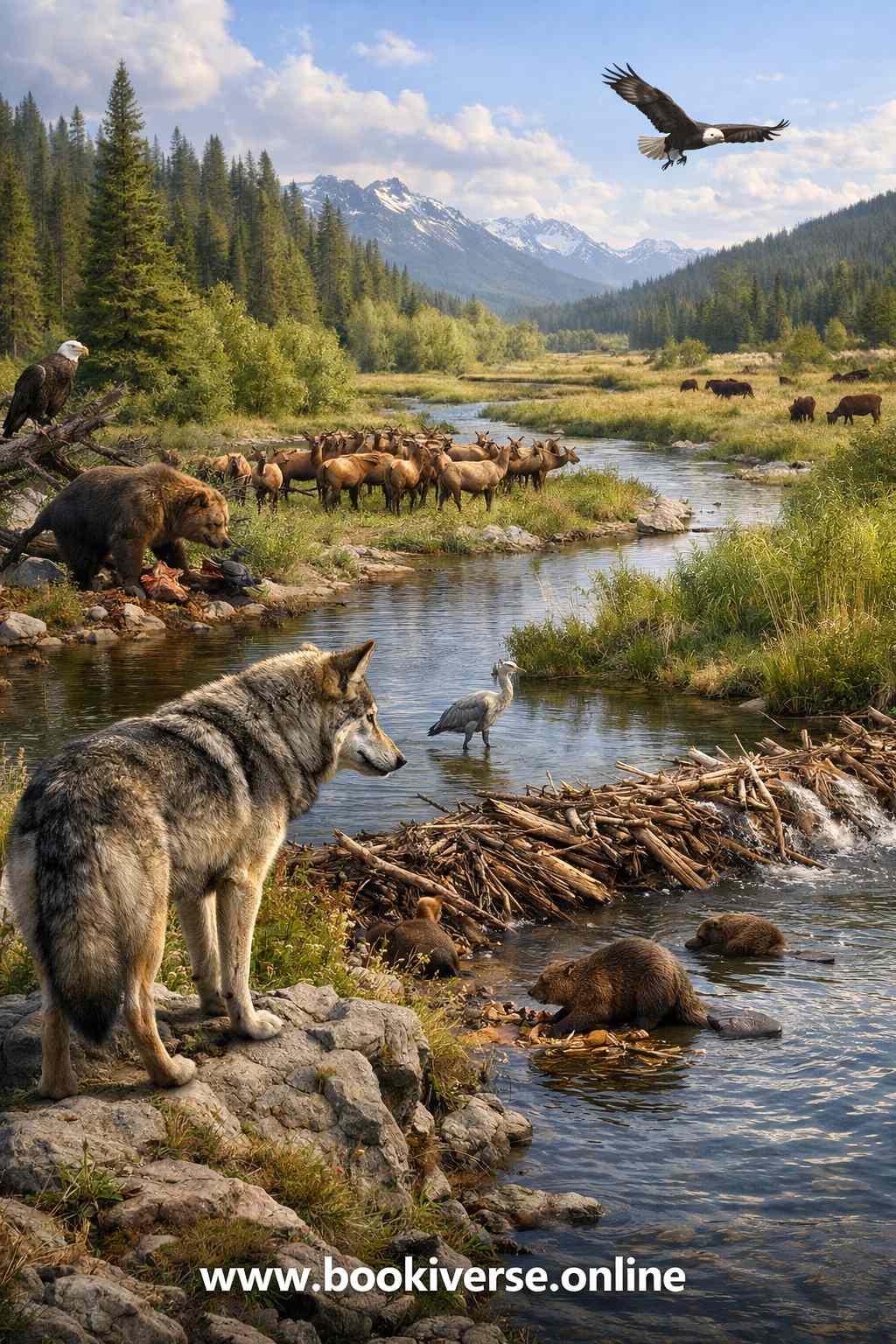
For seventy years prior to 1995, Yellowstone was devoid of its top predator. In their absence, the elk population, unchecked by natural predation, burgeoned. This overabundance of herbivores had a devastating impact on the park's flora. Riparian zones—the lush areas of vegetation along rivers and streams—were particularly affected, as elk browsed heavily on young willow and aspen trees. The decline of these trees led to increased soil erosion and a destabilization of riverbanks. The reintroduction of just a few dozen wolves initiated a remarkable reversal of this degradation. The wolves, by preying on elk, did not merely reduce their numbers; they also altered their behavior. This phenomenon, termed the "ecology of fear," caused the elk to avoid vulnerable areas like open river valleys. This behavioral shift allowed the beleaguered willow and aspen groves to regenerate.
The Cascade Effect: From Flora to Fauna and Geomorphology
The recovery of the riparian vegetation was the catalyst for a much broader ecological renaissance. The flourishing trees provided habitat and building materials for beavers, whose populations subsequently soared. The dams built by these industrious rodents created new wetland habitats, which in turn supported a greater diversity of amphibians, fish, and waterfowl. The stabilized riverbanks, reinforced by the resurgent root systems of willows and aspens, reduced erosion and even altered the physical geography of the rivers themselves, making them meander less and form deeper pools. Furthermore, the carcasses of wolf kills provided a crucial food source for a host of scavenger species, from grizzly bears and eagles to coyotes and beetles. Even the soil composition benefited from the nutrients returned by the decomposing remains. In essence, the wolves, by regulating the herbivore population, inadvertently re-engineered the entire ecosystem from the top down.
Broader Implications and Conservation Challenges
The Yellowstone experiment is not an isolated case; similar trophic cascades have been observed in marine ecosystems with the reintroduction of sea otters and in other terrestrial environments. These examples underscore a critical lesson for conservation biology: preserving biodiversity is not simply a matter of protecting individual species, but of maintaining the integrity of entire ecological systems. The removal of a single keystone species can trigger a cascade of unforeseen and deleterious consequences. However, the reintroduction of apex predators is often a contentious issue, fraught with socio-political challenges. It frequently faces opposition from agricultural and ranching communities who fear for their livestock, and from those who perceive these predators as a threat to human safety. Consequently, successful rewilding initiatives require not only a sophisticated understanding of ecological science but also a pragmatic approach to public engagement and conflict resolution. Balancing the ecological necessity of apex predators with the legitimate concerns of human populations remains one of the most formidable challenges in modern conservation.